S&P 500 Hits 52-Week Low
sp500 52 week lows

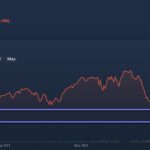
Now, things are getting interesting. There is a new SP500 52-week low. I’ve spent most of the first part of this year making the argument that the 2021 stock market run, especially the October 21 to January 22 was overdone and that the corresponding downturn in the markets from around February 2022 to April 2022 could be considered more of a return to “normal” than any sort of market correction. Reasonable minds may differ. Market Downturn Gets Real Today, the S&P 500 took out its 52-week low. From here on out, everything down, is truly down. Our one big sideways stock market ends here, and we really are heading for a potential correction here. This is why people calling for the Fed to raise interest rates so fast are dead wrong. The signs of the economy slowing, but not declining, are everywhere. That is exactly where you want to be. That is what a soft landing is. An economy gliding back to normal growth, normal employment, and normal interest rates all without triggering layoffs, housing crashes, and so on. All the Fed needs here is a little tap on the brakes. If it were me, I would skip a rate …
Read More

What Is the Difference Between PPI and CPI?

What Is the Difference Between PPI and CPI? 1

These days everyone is worried about inflation. The financial media often distill reporting about inflation down to a single, easy to understand number. “Inflation rose 5% in March,” they will say. What are they talking about, exactly? What is the CPI? What is the PPI? And, what is the difference between the PPI and CPI? What Is the PPI? The PPI is the Producers Price Index. The PPI is an index that measures the average change over time in the selling prices by the producers of goods. The PPI measures price changes from the producer’s perspective. The main Producer’s Price Index is composed of the approximately 10,000 PPIs for individual products and groups of products generated each month. What Is the CPI? The CPI is the Consumers Price Index. The CPI measures the average monthly change in the prices of a set of goods and service commonly consumed by U.S. households. The CPI measures price changes from the consumer’s perspective. The CPI measures a specific set of items and services that are set in advance. How Are the PPI and the CPI Different? To understand the difference between PPI and CPI, we need to look at their construction and purpose. …

Read More

Are Gold Mutual Funds a Good Way to Invest In Gold?

investing in gold bars

Recently, a client explained to me how he thought gold was a good investment and protection against inflation. I’m not going to talk today about if he is right or wrong. Instead, I’ll mention that his fabulous do it yourself investment solution was Fidelity’s Gold Fund. Good call? Gold Mutual Fund Holdings Well, it came as quite a shock to him that actual gold is only the sixth biggest investment in the fund. Five bigger investments in the mutual fund are in companies that have something to do with the gold industry. Granted, those companies’ stock prices will be heavily influenced by the price of gold, but certainly not on a one-for-one basis, and it is very possible for gold companies to have problems (and thus lower stock prices) unrelated to gold prices. If the point of investing in gold is to get an alternative investment from the stock market itself, investing in the stock of gold-based companies does not achieve that goal. — Is Bitcoin better than gold for this purpose? Gold companies are very susceptible to environmental lawsuits and regulations. Not to mention, gold happens to be mined in some very unstable countries throughout the world. A military …

Read More

Social Security Increase For 2021

social security cola

Every year Social Security payments are adjusted for inflation. That means that in most years, there is an increase in the monthly benefit paid to people collecting Social Security. This year, retirees can expect a small increase. Social Security COLA for 2021 The Cost-of-Living Adjustment, or COLA, is calculated using an inflation index called the consumer price index, or CPI. The adjustment for the following year is set in October so that there is enough time to get everything processed. (It probably doesn’t take that long anymore, but the law says October, so that’s the way it goes.) Of course, in order to calculate the CPI, you have to have the whole month of data, so the best they can do in October is use the September number, which came out showing negative inflation. Social Security is never cut by COLA, so instead, it will stay the same for the following year. The increase from 2020 to 2021 was will be 1.3 percent. Income Cutoff for Paying Social Security 2021 The same index is used to determine how much income a current wage earner must pay for Social Security tax, sometimes called FICA on paystubs. Since the COLA adjustment for benefits …

Read More

Fed Says 0% Interest For Years

future tunnel

According to news reports, the Federal Reserve will signal that its interest rate plan will remain unchanged through the end of 2023. These kinds of “leaks” are typically from Fed staffers trying to lessen any shock ahead of the actual Fed meeting. What 0% Interest For Three Years Means For starters, this is both a bold, and a baloney statement. It’s bold in that stating there will be no interest rate hikes for three years, the Fed is making a prediction about the U.S. economy and where it will be going and committing to 0%. It’s baloney, because if things go well coming out of the whole Corona virus thing and the U.S. economy roars ahead in 2021, or 2022, the Fed will just come out with a new statement saying that economic data dictate a new policy direction. So, what is the point of the Fed’s statement? Investors know how to make money. It isn’t about predicting the future, it’s about determining what the risk is and pricing it accordingly against the possible return. This is a lot easier than it sounds. It requires looking at an impossible number of variables, and weighing each one. In the end, the …

Read More

Interest Rates Rising Into the End of the Year

defenses economy

The Federal Reserve did not increase interest rates at its August 1st (2018) meeting. That was widely expected after the increase from the pervious meeting. Traditionally, the Fed tries not to raise rates in back to back meetings unless it feels like the economy is getting away from them. It allows the markets, and just as importantly, the economic data The Fed relies on to adjust to the previous hike before implementing another one. Rate Hike In September The Federal Reserve Bank did try and telegraph that it is currently looking at another rate hike for September. While the Fed did not raise rates, it did repeatedly say how “strong” the economy was, and how strong all the economic data was. Check out our Digit App review. And, for the first time in a long while, inflation is actually running near the Fed’s so-called target rate of 2%. While the Fed’s actions seem much more like 2 percent is a ceiling, rather than a target, recent data does suggest that inflation is running solidly near the two percent mark, so action is likely warranted. Will Higher Rates Trigger the Recession? Here is where things get tricky. While the Federal Reserve …

Read More

Is Inflation Real Finally?

The Fed has been raising interest rates over the last few years based on fears of inflation that never seemed to come to pass. But, with monetary policy still very loose, and investors in a good mood pushing the stock market higher and higher (with a few days of correction last week), the rising rates seemed to have no real effect on the economy. Unfortunately, this is the way economic policy works. Nothing happens, until it does, and then you have to hope that you already got it right. Inflation in January The 12-month rate for wholesale inflation rose to 2.7% for January. That’s a pretty big number, and it’s the first one that actually suggests the Fed’s long feared inflation might actually be real. Before the data came out, the markets (and the Federal Reserve’s dot plot) anticipated three rates hikes in 2018. The current rate is 1.5%, and assuming the Fed follows it’s recent history by raising rates a quarter-percent (0.25%) each time, that means that interest rates would end the year at 2.25%. That’s hardly high, historically speaking, but definately higher than anything this market has seen in a long time. Add-in the fact that the Fed …

Read More

Yellen Admits 2% Target Is Phony

rate hike without data

Janet Yellen admitted that the Fed’s two percent inflation target is largely phony. She didn’t say that in as many words of course. What she actually said was It would be imprudent to keep monetary policy on hold until inflation is back to 2 percent On the one hand, that makes sense. The levers that steer the economy do so more like those that control a supertanker, and less like the steering wheel of a Tesla. So, the Fed Chairwoman is right that you can’t simply wait for inflation to hit 2% and then start raising interest rates. That could lead to a hard landing, or worse, not work at all. Stealth Inflation But, that isn’t what she meant. What she meant was that there is no data indicating that inflation will be 2% anytime soon, but that doesn’t square with what she thinks is/maybe/will be happening in the economy. You see, she is convinced that inflation is hiding somewhere, cloaked in stealth mode, undetectable by economic statistics, like some sort of cloaked Klingon finance battleship. That seems to be a popular theory because of two factors. One, the stock market keeps going higher, and people are starting to worry …

Read More

Inflation Disappears (Again)

no inflation

Update: Yea! It looks like I was right, and everyone has come around. It’s August now, and it looks like those low inflation numbers were neither an aberration, nor temporary. There simply is no inflation, the job market, while full, is not hot, and there is no need to raise rates the rest of 2017, so say we all 🙂 The Fed has been working to raise interest rates because of the specter of inflation. However, with the exception of energy prices, there really hasn’t been much in the way of inflation. As a result, the Fed keeps explaining that they think that all those reports of low inflation were temporary. That all took a bit of knock today as the U.S. Government reported that inflation in June was zero. That’s right, zero, as in no inflation (again). And that comes after the actual 0.1% drop in inflation in May. This is of course, a far cry from the Fed’s so-called target of 2.0% inflation, and calling two months in a row of data temporary starts to look like ignoring data, so the tone has changed. A lot hinges on the July report. Check out my Credit Sesame review. Fed …

Read More