Keep the Change Automatic Savings Program Review
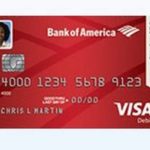
keep the change bank of america

As a former Certified Financial Planner, I can tell you that from a financial advisor standpoint, nothing is better than automatic. Automatic savings, automatic investing, automatic 401k, automatic bill pay, are all great ways to improve your personal finances. It seems like the financial industry agrees. One such automatic savings program comes from Bank of America and is called Keep the Change Savings Program. It works similarly to the Acorns automatic savings and investing app, but with a few small differences. Automatic Savings By Rounding Up Purchases There are a lot of ways to save automatically, including just setting up an automatic transfer to a savings account. However, some people are reluctant to commit to doing so. Ironically, these same people might sometimes be willing to save an equivalent amount of money if it can somehow be seen to be painless. The psychology of money is a powerful thing. Enter Keep the Change from Bank of America. Instead of setting up a specific amount to save each money, the Keep the Change program lets you by rounding up your purchases made on the debit card and then transferring the money to your savings account automatically. So, if you buy lunch …

Read More

Where To Get Free Checking

free checking graphic

If you know anything at all about personal finance, you know that big banks are financial institutions for big suckers. Right now, with interest rates at, a little bit over zero, everywhere, it isn’t as easy to tell, but big banks have never been good deals for average customers. Big banks are good deals for big money. Are you big money? Here is an easy way to tell. What interest rate do you get on your CDs and other accounts? If you get the posted rates, then you are not big money. If you get a rate negotiated by you and the bank manager because you business is so valuable, then you might be big money. Credit Unions Are Better Than Banks – Always There are numerous studies that show free checking is disappearing from big banks. Everyone already knows this, but until someone goes out and actually crunches the data, you don’t have a news story. Now, we’ve got a story and a money headline. Only 38 percent of banks offer no-strings, free checking. However, nearly 72 percent of credit unions offer free checking. By the way, this story NEVER changes. Credit unions are always better than banks for …

Read More

How To – Refinancing a Home Mortgage Steps and Tips

When considering refinancing your home mortgage, the first step is to get all of the details on what you have now.  Sure, you have vague numbers in your head, but that won’t help you answer all of the loan application questions, or make a real hard-numbers based calculation about the value of refinancing.  What exactly do you need to know before you dive into looking for low interest rates and refinancing your mortgage? Required Information Before Researching Interest Rates and Refinancing Current Balance of Home’s First Mortgage – Not a ballpark, an exact number according to your last statement. Current Balance of Home’s Second Mortgage or HELOC – Again, the number from the last statement. Current Interest Rate – What are you paying on your mortgage right now? ARM or Adjustable Interest Rate Features – When does your rate go up? (The actual date, not just the year.)  How much can it go up in the first year?  The second year?  Each year after that?  Is there a floor (minimum)?  Is there a ceiling (maximum)? When Did Your Mortgage Start? – What day did you close on? Current Home Value? – Check Zillow and Trulia to get a ballpark.  Print …

Read More

Youth Accounts at Banks

Banks have long offered various types of checking accounts and savings accounts. Some of these accounts are actually fully developed products that are different from other offerings. Others are merely gimmicks, and some bank account types lie in between. Youth Accounts Banking One such niche account offered at many banks is a youth account. These accounts are typically broken up into youth savings accounts and youth checking accounts. Just what each account is, and how it differs from other accounts depends on the bank. For the most part, special bank accounts for young people are joint accounts with limited access for one person. For most purposes, a person under the age of 18 cannot legally enter into a contract. No contract, or banking agreement, then no account, not even a kid bank account. Instead, in order to open a kid savings account or student checking account, the bank will require an adult’s signature. No matter what it gets called on the statement, what you have really just opened is a joint account with the child. So, then what is the point of a youth accounts? As an adult, you might not like the idea of joint account with your child. …

Read More

Payday Loans Scam

Payday loans are a bad deal for borrowers. The negatives that are inherent to this type of loan are quickly exacerbated by people making poor choices, or just as often people with no choices. Payday loans are named for the way this lending method got its start. Originally, the way a payday loan worked, was that you borrowed month, until payday and then you paid the loan back. The idea was that this could be bridge to your next paycheck if you had unexpected expenses or other issues that busted your budget and left you no options. In the years since this type of loan has morphed into no-win situation for people with no other options. Why Take a Payday Loan To understand how a payday loan works, and how they cause such so many problems, it is instructive to look at just how people use payday loans, and why. As is often the case, and example can be particularly instructive. Let’s consider James. James gets paid once a month. On May 15th, his car has trouble. The mechanic says it will cost $300 to get it repaired, but James does not have $300 in his checking account and he …

Read More

Good Enough Checking From Your Bank or Brokerage

I was going through my stack of mail to look at (separate from the stack that has things that actually need taken care of) and came across an offer for Fidelity’s mySmart Cash Account.  Intrigued, I decided to take a look at the Fidelity checking account that they were so proud of that they included a glossy little flier to advertise it.  The result?  What the—? Regular Bank Checking Sucks This Bad? The Fidelity myCash account boasts exactly two features that do not count as minimum basic features for a checking account.  First, it pays interest.  How much interest?  Well, this is where Fidelity gets a little weasel-ish.  The flyer says that I will “Earn three times the national average…”  Um, OK.  How much is that?  Folks, it isn’t even in the fine print, that’s how much the rate must be worth! A visit to Fidelity’s website reveals the depressing answer.  A balance of less than $5,000 in a myCash checking account will earn a whopping 0.20% APR.  Whoo hoo!  But wait!  Maybe if you have over $5,000 it is worthwhile?  Survey says? 0.20% again.  Yes, go through all of the steps and take the time to open a Fidelity …

Read More

Bank Mortgage Scams Continue

Think that after a multimillion dollar lawsuit and settlement that the big banks would start playing by the rules and treating their customers right? If so, the bridge salesman convention would LOVE to have you drop by. Get ready for the next mortgage scam by the banks. Single Point of Contact Scam One of the things that the big mortgage banks were supposed to do to help their customers and stop mortgage foreclosure fraud was provide a single point of contact for borrowers to deal with on issues like mortgage modification, refinance or foreclosure avoidance. Before, borrowers were forced to call some 1-800 number where a faceless phone drone would do the standard dance. The borrower provided all of his or her information, and then the person on the phone would tell them what they needed to do. Unfortunately, customers found that they had to start over every time they called. One mortgage modification specialist would say that they needed certain documents, then another one would say that they needed additional, or different documents, until finally, one day, a foreclosure notice showed up in the mail because the borrower had “failed” to comply with the necessary procedures. By having a …

Read More

Online Banking Security Internet Privacy

When it comes to protecting your privacy online, nothing is more important than a good browser data clearing tool. Deleting your cookies through a web browser’s interface hasn’t been good enough for a long time. Fortunately, utilities like CCleaner and Glary Utilities as well as Firefox add-ons and Chrome extensions fill the need to completely clear your private data from browser cache, flash cookies, and so on. What we need now is a way to manually and selectively protect certain cookies from cleaning. A lot of banks and financial institutions are requiring users to take an extra step when accessing their account information from a new computer that has never accessed the site before. For example, Chase Bank, which handles the Amazon Rewards Visa Card, requires users to get an authentication code via text message or email to one of the numbers or addresses on record with the account in order to log in from a new computer. Bank Login Register Computer First Online banking customers at ING have to answer one or more of their extra security questions in order to access their high-interest online savings account or online checking account. This extra layer of security helps prevent hackers …

Read More

Overdraft Protection For Debit Cards

Lot of people have been getting notifications from their bank or credit union about overdraft protection for debit cards. These notifications sound urgent and tell you that unless you respond that your financial institution will have to turn off overdraft protection on your debit card soon. While it sounds like your bank is trying to take care of you, the opposite is likely true. Debit Card Overdraft Protection You may be aware that recent banking reform legislation shut down some of the worst abuses that banks and credit unions used to generate big fee income at the expense of their customers. One of those banking abuses was so-called overdraft protection, which in reality is just a way to charge you big fee. When you write a check, that check gets sent to your bank. Your bank pays the amount on the check out of funds in your checking account. Overdraft protection turns on when you don’t have enough money in your checking account for the check to clear. Most people assume that if there is not enough money in their account to pay a check they wrote that the check bounces, but not if there is overdraft protection. The way …

Read More