Fed Raises – Did It Break the Economy?

Fed Raises - Did It Break the Economy? 1

I’m not an economist and I don’t play one on TV. I haven’t even stayed at a Holiday Inn Express, but I have been involved in finance for a long time now, and I’m old enough to have a pretty good memory. Add that to a lot of research over the years as a freelance financial writer for a lot of publications and websites, and I have an informed opinion, if not a professional one. Fed Raises Rates 0.75% Again The Fed raised interest rates again, another big 0.75% hike. So, here is the punchline. The Fed has raised interest rates a total of 1.5% in just two months. Look up the last time the Fed raised rates that quickly. Go ahead. I’ll wait. It was the 1980s and inflation was crazy rampant. Every economist older than 50 had drilled into their head that inflation was more of a problem than a recession because that is what is true for Wall Street. Unfortunately, that is not necessarily what is good for Main Street, and by extension, the markets. Last time the Fed raised rates was from 2016 to 2019. That increase was a nice gentle 2.25% increase over three years. …
Read More

Did Mortgage Rates Hit 12-Year High?

Did Mortgage Rates Hit 12-Year High? 2

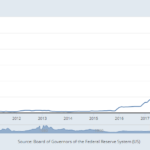
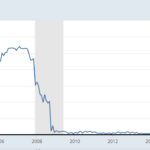
The press loves a good scare story, and mortgage rates hitting a 12-year high is just the ticket. Mortgage rates did hit a 12-year high, and I suppose for those who are newer to the world of finance that probably seems like a big deal, but the reality is a little different. The 30-year fixed mortgage averaged 5.11% last week. That isn’t remotely a historically high mortgage interest rate. In fact, it wasn’t that long ago that a 5% mortgage was a great rate. It still is. But, these haven’t been normal times. The U.S. economy seems to lag on differently than it once did. The inflation we see today is the only real inflation we have seen in decades. Every time the American economy looked it like might get going back to “normal” something happened to smack it back down turning what used to be crazy, historically low interest rates into normal interest rates to the newest generation hitting financial literacy. This 10-year chart of the Federal Funds rate shows that we haven’t seen a Fed Funds rate above 2.5% in the last decade. In fact, just when we got close to something that might be considered normal or …

Read More

How Do Rising Interest Rates Affect Credit Cards?

rewards credit card reviews

How Does The Federal Reserve Raising Rates Affect My Credit Cards? You heard that the Federal Reserve raised interest rates. How does the Fed increasing interest rates affect your credit cards personally? It’s actually pretty easy to tell. First off, your credit cards are most likely tied to something called the prime rate, not the federal funds rate. The rate the Federal reserve raises is the rate the Fed charges banks for overnight loans. The prime rate is the interest rate that banks charge their most valuable (wealthy) customers. The prime rate moves in step with the Fed Funds rate. Before the Fed raised rates, the fed fund rate was 0% (technically 0% – 0.25%), now it is 0.25% (technically 0.25% to 0.50%). The prime rate was 3.25% and now it is 3.50%. How do rising interest rates affect your credit cards? Simple. Your credit card interest rate is the prime rate plus another amount. The other amount is made up by the credit card issuer and you agreed to it when you signed the credit card application. Finding out how much your interest rate is, is easy. Just check your statement or log on to your credit card’s website. …

Read More

Blaming the Fed

Blaming the Fed 3

Selective amnesia and analysts dying to be “right” is contributing to a flood of inaccurate articles seeking to blame the Fed. I saw this in my Twitter feed this morning and I just couldn’t let it go by. It’s filled with the kind of half-truths and misinformation that builds an analyst’s career, unfortunately, but that doesn’t make it true. Here we go. According to this tweet, The Fed spent 12 years creating an “everything bubble,” a term so bizarre that it requires quotes. Oh, and the Fed didn’t spend 12 years creating this so-called everything bubble. Oh, and before we start pointing fingers, until THIS YEAR neither this analyst, nor almost any other was asking for the Fed to tighten monetary policy because the economy was teetering on a cliff and every bit of the stimulus was required to prevent the Great Recession II, or worse. Yep. For exactly, ONE MONTH, inflation has been a bit crazy. Too bad the graph they posted as “evidence” is so far zoomed out that you can’t see what really happened. Maybe they couldn’t find one that showed more recent events. Oh, wait! Here’s one. The crazy, reckless Fed that has been pumping up …

Read More

Negative Interest Rates and The Fed

negative interest rates

Like any type of news, sensational, click-bait news draws in a lot of clicks for financial websites. Unfortunately, this can lead to a lot of confusion, especially for folks who only read the headlines. I can often tell when this happens because my questions fill up with vaguely understood concepts and concerns about unlikely situations and issues. This is happening more and more with the topic of negative interest rates. Negative Interest Rates What are negative interest rates? Let’s start with what are negative rates. The concept is simple on its face. Interest rates are normally, “positive.” The borrower pays a (positive) interest rate on a loan to the lender. Or, in the case of a savings account, the bank pays a (positive) interest rate to the account holder. In a world of negative interest rates, this would theoretically reverse. The lender would pay the borrower to take out a loan, and the account holder would pay the bank to keep their money. If this sounds bizarre, you are right, and it wouldn’t really happen. — We’ll get to that in a moment. More abstractly, The Federal Reserve Bank pays banks a small amount of interest to hold deposited funds …

Read More