Finance Press Headlines

stock market headlines

Oh, the financial press loves their dramatic headlines. Sometimes in order to make the stock market more interesting, you have to give people a little bit of whiplash. Whew! What a difference a day makes. Yesterday, it was the “best day in 7 weeks.” Today, it’s the “worst month since 2008.” Overall, the market is still moving sideways, although we are getting a bit of a drift down and things might change especially as the Fed raises interest rates to cool off inflation. Remember, inflation cools off when the economy cools off. That’s the dance. Go too far to stop inflation and you can push the economy into a recession.

Stock Market Melt Up

stock market melt up

Oh, goodie. It’s time for some more stock market terminology. What Is a Melt Up? The world of finance, like any specialized group, has numerous terms, acronyms, and phrases that apply to managing money and investing in the stock market. Things like “Santa Claus Rally” are less about being able to describe something, and more about having fun, sometimes clever, ways to describing events, strategies, and happenings that occur. Santa Claus Rally — The somewhat common phenomenon of the stock market rising into the end of the year. Today’s word of the day comes courtesy of CNN Finance and Luke Lango, InvestorPlace senior investment analyst who wrote that they believe there will be a massive melt up over the next two years in which the stock market would rise 20% or more before tipping over into a recession or crash. I haven’t had a chance to look into Luke Lango’s track record. Maybe I’ll do that when I finish writing my freelance finance writer projects. Should We Worry About a Melt Up? Good news, investors. As always, the best way to invest for long-term goals is with a well-diversified portfolio tailored to your goals and risk tolerance. Such a portfolio …

Read More

Did Mortgage Rates Hit 12-Year High?

Did Mortgage Rates Hit 12-Year High? 1

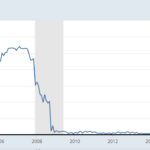
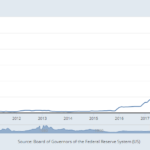
The press loves a good scare story, and mortgage rates hitting a 12-year high is just the ticket. Mortgage rates did hit a 12-year high, and I suppose for those who are newer to the world of finance that probably seems like a big deal, but the reality is a little different. The 30-year fixed mortgage averaged 5.11% last week. That isn’t remotely a historically high mortgage interest rate. In fact, it wasn’t that long ago that a 5% mortgage was a great rate. It still is. But, these haven’t been normal times. The U.S. economy seems to lag on differently than it once did. The inflation we see today is the only real inflation we have seen in decades. Every time the American economy looked it like might get going back to “normal” something happened to smack it back down turning what used to be crazy, historically low interest rates into normal interest rates to the newest generation hitting financial literacy. This 10-year chart of the Federal Funds rate shows that we haven’t seen a Fed Funds rate above 2.5% in the last decade. In fact, just when we got close to something that might be considered normal or …

Read More

The Fed’s Balance Sheet

interest rates federal reserve

The Federal Reserve is best known for setting the Fed Funds Rate which is the interest rate that the Federal Reserve charges banks for overnight loans. That, in turn, influences, or outright directly adjusts, several other interest rates that have a meaningful impact not only on business, but American citizens and consumers as well What Is the Fed’s Balance Sheet? What is the Federal Reserve’s balance sheet? Well, that’s a tiny bit complicated. To understand you have to accept the concept that there is a certain amount of money floating around in the U.S. economy at any one time. That amount is not fixed. One day, you have $50,000 in your checking account, and a $50,000 loan, for a total of $100,000 floating around in the overall money supply. The next day, you use that $50,000 in your checking account to pay off the loan, essentially removing that $50,000 from the economy. The U.S. economy is enormous, and at any one time there are trillions of dollars floating around in the economy. However, some of that money is moving and doing something and some of it is stuck. Think of all those gold coins in Scrooge McDuck’s vault. They exist. …

Read More

How Do Rising Interest Rates Affect Credit Cards?

rewards credit card reviews

How Does The Federal Reserve Raising Rates Affect My Credit Cards? You heard that the Federal Reserve raised interest rates. How does the Fed increasing interest rates affect your credit cards personally? It’s actually pretty easy to tell. First off, your credit cards are most likely tied to something called the prime rate, not the federal funds rate. The rate the Federal reserve raises is the rate the Fed charges banks for overnight loans. The prime rate is the interest rate that banks charge their most valuable (wealthy) customers. The prime rate moves in step with the Fed Funds rate. Before the Fed raised rates, the fed fund rate was 0% (technically 0% – 0.25%), now it is 0.25% (technically 0.25% to 0.50%). The prime rate was 3.25% and now it is 3.50%. How do rising interest rates affect your credit cards? Simple. Your credit card interest rate is the prime rate plus another amount. The other amount is made up by the credit card issuer and you agreed to it when you signed the credit card application. Finding out how much your interest rate is, is easy. Just check your statement or log on to your credit card’s website. …

Read More

Fed Day 2022 – Fun and Rates

interest rates federal reserve

It’s Fed Day, boys and girls, and the markets are feeling pretty good this morning, having already priced in negativity from Russia’s invasion of Ukraine. Markets are up, although they trimmed the earlier pop. All eyes are on the Federal Reserve Board meeting where the Fed is expected to raise interest rates. Usually, rising interest rates mean putting the brakes on business and stocks, so why is the market happy? Inflation is higher than anyone would like, and the biggest, baddest, bluntest, tool in the inflation fighting basket is higher interest rates. In other words, everyone wants higher rates in order to fix inflation, and everyone is expecting the Fed to give them what they want. So, the markets are up. What’s the catch? Well, higher rates really do slow down the economy, and while inflation has surged as of late, remember it’s coming off of years of very low inflation and a pandemic. It may be that the inflation we see is a temporary surge. While it cannot be ignored, it can be overreacted to, and this is where things get tricky. Raise interest rates too high, too fast, and crash the economy. Raise rates too slowly and let …

Read More

What Is the Difference Between PPI and CPI?

What Is the Difference Between PPI and CPI? 2

These days everyone is worried about inflation. The financial media often distill reporting about inflation down to a single, easy to understand number. “Inflation rose 5% in March,” they will say. What are they talking about, exactly? What is the CPI? What is the PPI? And, what is the difference between the PPI and CPI? What Is the PPI? The PPI is the Producers Price Index. The PPI is an index that measures the average change over time in the selling prices by the producers of goods. The PPI measures price changes from the producer’s perspective. The main Producer’s Price Index is composed of the approximately 10,000 PPIs for individual products and groups of products generated each month. What Is the CPI? The CPI is the Consumers Price Index. The CPI measures the average monthly change in the prices of a set of goods and service commonly consumed by U.S. households. The CPI measures price changes from the consumer’s perspective. The CPI measures a specific set of items and services that are set in advance. How Are the PPI and the CPI Different? To understand the difference between PPI and CPI, we need to look at their construction and purpose. …

Read More

Russia Invades Ukraine

Russia Invades Ukraine 3

Thinking about your investments as war starts is kind of cold and calculating, but also perfectly natural. What should I do when Russia invades Ukraine? First, remember, investors do not like uncertainty. Nothing is more uncertain than the course of war. Expect a market downturn with every new development that isn’t the war ending. Second, remember that the markets tend to overreact to initial news because everyone is both reacting, and trying to predict how others will react. Third, remember if you have a well-diversified portfolio, this sort of thing should not affect your investing strategy. Markets go up and markets go down. As far as your long-term investments are concerned it doesn’t matter whether the markets went down because of war, or just a cyclical phase of the market cycle. Do not panic. Do not sell unless you were already planning it. Fourth, if you are actively investing for the long-term in your 401k, IRA, 529 plan, or whatever else, KEEP GOING. This is exactly how dollar cost averaging works for you. Your investments when the markets are down become your buying at the bottom in the future. Do not miss the opportunity. Dollar cost averaging does the work …

Read More

Blaming the Fed

Blaming the Fed 4

Selective amnesia and analysts dying to be “right” is contributing to a flood of inaccurate articles seeking to blame the Fed. I saw this in my Twitter feed this morning and I just couldn’t let it go by. It’s filled with the kind of half-truths and misinformation that builds an analyst’s career, unfortunately, but that doesn’t make it true. Here we go. According to this tweet, The Fed spent 12 years creating an “everything bubble,” a term so bizarre that it requires quotes. Oh, and the Fed didn’t spend 12 years creating this so-called everything bubble. Oh, and before we start pointing fingers, until THIS YEAR neither this analyst, nor almost any other was asking for the Fed to tighten monetary policy because the economy was teetering on a cliff and every bit of the stimulus was required to prevent the Great Recession II, or worse. Yep. For exactly, ONE MONTH, inflation has been a bit crazy. Too bad the graph they posted as “evidence” is so far zoomed out that you can’t see what really happened. Maybe they couldn’t find one that showed more recent events. Oh, wait! Here’s one. The crazy, reckless Fed that has been pumping up …

Read More

Inflation Is Real

Some (me) people have been under the impression that the claims of inflation have been overblown. The December numbers suggest that I am wrong, even if the chicken-littles aren’t right. The numbers say core prices are up 5.5% year over year for December. Remember that this comes off an unnatural pricing environment during the pandemic, but these numbers are big enough to take seriously. The Labor Department reported Wednesday that excluding volatile food and gas prices, so-called core prices surged 0.6% from November to December. Measured year over year, core prices jumped 5.5% in December, the fastest such increase since 1991. https://apnews.com/article/consumer-prices-inflation-c1bfd93ed1719cf0135420f4fd0270f9 Supply chain problems are part of the cause, but the economy does have too much money sloshing about. The key is how much, and how fast should the Fed be raising interest rates. My primary concern is still that raising rates too fast could crush this unnatural economy still affected by Covid and its related problems. Unfortunately, there is no choice now. Runaway inflation will kill the economy just as dead as rising rates. The trick is still the supply chains. Prices won’t come down with less spending, unless the supply is there to react to lower spending. …

Read More