Subprime Auto Loans and Home Loans

Subprime Auto Loans and Home Loans 1

Understanding Auto Loans: Prime vs. Subprime, A Comparison In today’s economic landscape, inflation and resuming student loan payments, are causing financial strain for many Americans, leading to record-high default rates on auto loans. The situation is reminiscent of the financial crisis in 2008, but this time, it’s the auto loan market that’s feeling the heat. With borrowing costs reaching unprecedented levels, it’s crucial to understand the dynamics of prime and subprime auto loans and compare them to home loans of the same names. The Rise in Auto Loan Defaults Recent data from Bloomberg reveals a concerning trend in auto loan defaults. The percentage of subprime auto borrowers who are at least 60 days past due on their loans surged to 6.11% in September, up from 5.93% in January. These numbers paint a grim picture of the financial struggles faced by many Americans. Prime vs. Subprime Auto Loans To comprehend this issue better, let’s compare prime and subprime auto loans, taking into consideration the credit scores of borrowers. Prime Auto Loans Subprime Auto Loans Home Loans vs. Auto Loans To draw a comparison, let’s examine home loans with similar terms: Home Loans The Impact of Federal Reserve Decisions The recent surge …


Read More

Should the Fed Stop Now?

Should the Fed Stop Now? 2

Below is a quick belt out of information and opinion before I head off with the family on a last-of-summer vacation. Don’t bother letting me know about other links, grammatical errors, or the like. I’ll go back to normal when I get back next week. Should the Fed stop raising interest rates now? Even the staid financial press is starting to ask the question that obsequious interest rate hawks insisted was off the table, is it time to stop raising interest rates? Inflation Is Down In the carefully written narrative of the Federal Reserve fighting inflation, the Fed bank must raise interest rates, longer, and more painfully than the lesser economic hawks can stomach. Only then can inflation be brought under control by the tough love of inflation hawks. But, as they like to say, a funny thing happened on the way to the forum. It seems that if the economy were overstimulated into inflation by various temporary economic measures such as government checks from a larger child tax credit, and student loan borrowers unleashed temporarily from their burdensome payments, then the boost to inflation was temporary as well. The result is that with a tap on the brakes in …

Read More

Supreme Court Blocks Loan Cancellation

inflation guy

Alright, here is the short, short version typed up as fast as I possibly can, while I wait for my documents at the title company. In Washington D.C. they have been stretching legislation to lift more than it as designed to since before they built the Congressional building. This time, the Supreme Court decided it was too far. On a party line vote, Republicans said no, and Democrats said yes. The reasons are moot. It’s time to look at your money. Student Loan Payments Deferred Back during the pandemic when everyone was worried the economy was on the verge of collapse with hundreds of thousands of Americans unable to work because their jobs were shut down, the Feds put a pause on student loan payments. It turns out that a lot of people were spending a lot of their after-tax income paying student loans instead of consuming the goods and services that drive the economy. An extra couple hundred dollars a month can do that for you. The student loan payment pause is ending. I don’t know why Republicans hated the student payments thing so much. Maybe it’s just that they didn’t want people to have something to like about …

Read More

Stock Market Rallies

Stock Market Rallies 3

More proof that elections and politics don’t matter as much to the markets as politicians and pundits would have you believe, the Dow Jones rallied to its best one-day gain since 2000. The Dow ended up over 1,200 points, or 3.7% in one day not because anyone did or did not win this week’s elections, but because the latest inflation numbers came in at 7.7% year over year. The latest inflation figures suggest that price increases may be slowing, and the Fed’s work may be done. Job Cuts For some additional inflation news, remember that various tech companies have announced tens of thousands of layoffs. That takes some of the pep out of the job market as well. Higher interest rates, harder to find jobs, and less leverage getting raises at existing jobs all spell a dramatic decrease in consumer spending heading into the all-important holiday season. Stock Market 2022 and 2023 Where does that leave the markets for the rest of 2022 and into 2023? Barring in new bad news or terrible numbers, Wall Street loves a good Santa Claus Rally. However, gains may be tempered by end of year selling as investors look to lock in some capital …

Read More

Top 4 Places to Save Money During Recession

i bond

It is looking less and less like the U.S. economy will achieve the promised land of a soft-landing and will instead end up in a recession. It may turn out to be a shallow recession, but the economy is not typically forgiving of rapid increases in interest rates. If hiring falls off before the holiday season, then look out below. Where To Save Money During Recession Making smart personal finance decisions during a recession is critical to avoid losing progress on your goals. The four places are the best way to save money during recession and even depressions. Money Market Account – No it’s not sexy, but it is safe, and it should pay more than your basic savings account. Get at least three months of expenses put aside in case you are one of the unfortunate ones who lose their job during a recession. The silver lining on recessions is that rising interest rates means earning more money on your savings accounts and money market accounts. Consider a high-yield online savings account from a bank you trust to earn even more. Pay Off Debt – Alright, this is cheating. Paying off debt isn’t technically saving money, but it will …

Read More

Did Mortgage Rates Hit 12-Year High?

Did Mortgage Rates Hit 12-Year High? 4

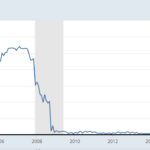
The press loves a good scare story, and mortgage rates hitting a 12-year high is just the ticket. Mortgage rates did hit a 12-year high, and I suppose for those who are newer to the world of finance that probably seems like a big deal, but the reality is a little different. The 30-year fixed mortgage averaged 5.11% last week. That isn’t remotely a historically high mortgage interest rate. In fact, it wasn’t that long ago that a 5% mortgage was a great rate. It still is. But, these haven’t been normal times. The U.S. economy seems to lag on differently than it once did. The inflation we see today is the only real inflation we have seen in decades. Every time the American economy looked it like might get going back to “normal” something happened to smack it back down turning what used to be crazy, historically low interest rates into normal interest rates to the newest generation hitting financial literacy. This 10-year chart of the Federal Funds rate shows that we haven’t seen a Fed Funds rate above 2.5% in the last decade. In fact, just when we got close to something that might be considered normal or …

Read More

The Fed’s Balance Sheet

interest rates federal reserve

The Federal Reserve is best known for setting the Fed Funds Rate which is the interest rate that the Federal Reserve charges banks for overnight loans. That, in turn, influences, or outright directly adjusts, several other interest rates that have a meaningful impact not only on business, but American citizens and consumers as well What Is the Fed’s Balance Sheet? What is the Federal Reserve’s balance sheet? Well, that’s a tiny bit complicated. To understand you have to accept the concept that there is a certain amount of money floating around in the U.S. economy at any one time. That amount is not fixed. One day, you have $50,000 in your checking account, and a $50,000 loan, for a total of $100,000 floating around in the overall money supply. The next day, you use that $50,000 in your checking account to pay off the loan, essentially removing that $50,000 from the economy. The U.S. economy is enormous, and at any one time there are trillions of dollars floating around in the economy. However, some of that money is moving and doing something and some of it is stuck. Think of all those gold coins in Scrooge McDuck’s vault. They exist. …

Read More

Fed Day 2022 – Fun and Rates

interest rates federal reserve

It’s Fed Day, boys and girls, and the markets are feeling pretty good this morning, having already priced in negativity from Russia’s invasion of Ukraine. Markets are up, although they trimmed the earlier pop. All eyes are on the Federal Reserve Board meeting where the Fed is expected to raise interest rates. Usually, rising interest rates mean putting the brakes on business and stocks, so why is the market happy? Inflation is higher than anyone would like, and the biggest, baddest, bluntest, tool in the inflation fighting basket is higher interest rates. In other words, everyone wants higher rates in order to fix inflation, and everyone is expecting the Fed to give them what they want. So, the markets are up. What’s the catch? Well, higher rates really do slow down the economy, and while inflation has surged as of late, remember it’s coming off of years of very low inflation and a pandemic. It may be that the inflation we see is a temporary surge. While it cannot be ignored, it can be overreacted to, and this is where things get tricky. Raise interest rates too high, too fast, and crash the economy. Raise rates too slowly and let …

Read More

What Is the Difference Between PPI and CPI?

What Is the Difference Between PPI and CPI? 5

These days everyone is worried about inflation. The financial media often distill reporting about inflation down to a single, easy to understand number. “Inflation rose 5% in March,” they will say. What are they talking about, exactly? What is the CPI? What is the PPI? And, what is the difference between the PPI and CPI? What Is the PPI? The PPI is the Producers Price Index. The PPI is an index that measures the average change over time in the selling prices by the producers of goods. The PPI measures price changes from the producer’s perspective. The main Producer’s Price Index is composed of the approximately 10,000 PPIs for individual products and groups of products generated each month. What Is the CPI? The CPI is the Consumers Price Index. The CPI measures the average monthly change in the prices of a set of goods and service commonly consumed by U.S. households. The CPI measures price changes from the consumer’s perspective. The CPI measures a specific set of items and services that are set in advance. How Are the PPI and the CPI Different? To understand the difference between PPI and CPI, we need to look at their construction and purpose. …

Read More

Market Correction… Barely

Market Correction... Barely 6

So, the S&P 500 closed low enough on Tuesday to make it 10% lower than its closing high on January 3rd marking, officially at least, a correction in the stock market. If you aren’t seeing a lot of fuss, that’s because it really isn’t that big of a deal. Back on January 3rd, you couldn’t swing a dead cat without hitting someone who thought the market was overvalued, that it had run up too high for too long. So, when the market began a slow sideways, sloping down, trend over a two-month period, nobody really worried about it. It’s as if those prices on January 3rd weren’t real and the market was getting back to reality. Even now, there are plenty of people out there saying that the market is still too high. They might be right, and frankly another two-month long drop down another 10 percent probably won’t be much of a fuss either. After all, while this correction is a market down 10 percent from its peak, it’s a market that is zero percent down from last October, and zero percent down since last July, and still very much up from before that. In other words, unless you …

Read More