Does Raising Interest Rates in December Matter?
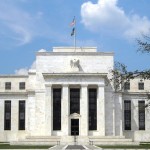
interest rates federal reserve

Usually, I caution people against paying too much attention to the Federal Reserve and when they set interest rates. For most investors, this is a distraction that doesn’t really impact, over a longer term, their investments as much as the media suggests it does. However, since the Federal Reserve has not raised interest rates in a very long time, there are those who don’t really remember what happens, and even those who weren’t adults, or investors, the last time the Fed actually raised interest rates, so let’s review a bit. How The Fed Raises Interest Rates The Federal Reserve actually sets interest rates in two way. First, the Fed sets a discount rate, which is the rate the Federal Reserve itself charges to banks for lending them money overnight. The second interest rate is the Federal Funds rate. This rate is the interest rate that federally insured banks charge either other for overnight loans. (Exactly why, banks need to borrow money in this way is a topic for another day.) As you can see, neither of these interest rates directly affects you as a banking customer or investor. However, these interest rates heavily influence other interest rates that do apply …

Read More

Investing in Municipal Bonds Now

Is now a good time to be investing in municipal bonds? Also known as muni bonds, municipal bonds are bonds issued by state and local governments. Typically, these bonds are used to finance government operations or capital investments for various local and state government agencies. Like corporate bonds, muni bonds pay interest and return your principal at the end of the bond’s term. Should You Invest in Municipal Bonds Now? Municipal bonds are a great investment opportunity that goes largely unnoticed by most non-professional investors. Muni bonds are safer than stocks over a long period of time and can offer significant tax advantages. When investors do take advantage of investing in muni bonds, it is often via muni bond funds which offers a very different investment experience than investing directly in actual muni bonds. So, is now a good time to invest in munis? Like all bonds, the price of muni bonds moves in the opposite direction of interest rates. That is if interest rates rise, bond prices fall. The Federal Reserve’s benchmark interest rate is currently at zero, which means that the part of bond pricing that is attributable to interest rates can only go down. In essence, bond …

Read More

Fed Does Not Raise Rates Market Confused

So, this is interesting. The Federal Reserve did not raise interest rates at its September (2015) meeting. This is not surprising, per se. There were numerous international banks and organizations, plus tons of U.S. economists who worried that an increase would be too soon for a fragile economy. Here is where it gets weird. The stock market LOVES to plunge in reaction to a rate increase. Sure, it only lasts a day or two, but there’s nothing quite as fulfilling to a stock market index as dropping 200 or 300 points whenever the Fed raises interest rates. The catch is that Wall Street actually secretly loves interest rate hikes. A Federal Reserve increasing interest rates is the equivalent of a stern father taking away our credit card for our own good. The market throws a temper tantrum, of course, but it’s better for everyone in the long term. If the Fed raises interest rates, then there won’t be an inflation boogeyman. Based on all the pundits and analysts out there, it sure seems like the stock market was expecting a rate increase and all ready to throw its fit and wring its hand, probably just until the weekend, but still. …

Read More

Stock Market Down On Jobs

The Dow Jones Industrial Average is down about 300 points right now because of a good jobs report. As the main character in one of my daughter’s shows says, “What the huh?” Jobs Good, Rates Rise? No one thing seems to move the stock market more regularly than the jobs report. As always, this new report is actually about last month. After all, it takes some time to collect and calculate the data. What makes this particular jobs report so important is its timing. The Federal Reserve Board is scheduled to meet in September. The Fed has expressed a willingness, if not a desire, to raise interest rates this year if the economy is doing well enough. Everything looked pretty good for a rate increase in September, but then the whole China market blowup thing happened and with it, the U.S. stock market took a hit, and the idea of a rate hike got a little more iffy. But, with a good jobs report, the rate hike is back on the table… maybe. You see, the jobs report was good, but not good enough to make this a no brainer. Jobs were created, but well below the 200,000 that would be …

Read More

What Happens When The Fed Raises Interest Rates?

There has been a lot of talk recently about the Federal Reserve raising interest rates. First, remember that the Federal Reserve only actually sets interest rates for banks. Specifically, the Fed sets two interest rates. The first interest rate, called the Discount Rate, is the interest rate the Fed charges banks for an overnight loan. The second rate is called the target rate, and this is the interest rate the Fed tries to achieve via the open market operations. Since the monetary crisis that started off the Great Recession, the Federal Reserve’s target interest rate has essentially been zero. The purpose of such a rate is to make it more worthwhile for banks to lend money. The idea is that more money in the economy stimulates additional growth. The economy is still growing very slowly, but it is still growing, which brings us to raising interest rates. Interest Rates Growth and Inflation In physics, basic equations come with the caveat that they are true, on a friction-less plane, in a vacuum. In other words, if there is no gravity or wind resistance. Such calculations are useful for understanding concepts, but would be devastatingly inaccurate for use in the real world. …

Read More

Is The Economy Good or Bad?

I occasionally get questions regarding the economy that sound frustrated in the inability to get a clear answer. That is understandable. The U.S. economy is getting better, but it isn’t really getting better fast enough for anyone to be able to benefit from the fact that it is getting better. Add in the fact that many news outlets have gone partisan and that their reporting is designed more to highlight certain aspects that make their guys look good and the other guys look bad, and you get a confusing picture about whether the economy is good or bad right now. Doesn’t make much sense does it? To really understand what is going on economically, it may help to read an article from The Economist. As an aside, whenever you really want a reasonable idea of what is happening in the U.S. it can be helpful to read non-U.S. publications such as The Economist, and to a lesser extent, the Guardian. The Economist leans toward the conservative side, but that doesn’t mean the same thing as it does here in the U.S. More specifically, the publication does not have an owner or readership with a dog in the hunt, so to speak, …

Read More

Unemployment Hits 7% for November

Unemployment numbers for November were released today. The unemployment rate hit 7.0 percent for the first time since November 2008. If your recent economic history is a little fuzzy, that’s right about the time the banking crisis and housing market implosion was a full tilt. In other words, we’ve been over seven percent unemployment since the so-called Great Recession started. I get  a lot of questions about economic news stories. In particular, people want to understand the significance of the various economic statistics that come out better so that they can separate real new from hyperbole. So, let’s take a look at these unemployment numbers and see what the deal is. What Is the Unemployment Range? First, off, it can be hard to overstate how important unemployment (or more accurately, employment) is to the overall well being of the economy. I’ve covered before what makes unemployment numbers so important, so we’ll leave that out for today and focus instead on what is going on here, and why it matters so much. One question I get from time to time is why people get so excited over small movements in the numbers. That’s a good question. It can help to have …

Read More

Can The Fed Really Be Treasonous?

Recently, newly official Presidential candidate Rick Perry suggested that it would be "treasonous" for Ben Bernanke and the Federal Reserve to "print more money" in order to play politics. If you want the political dogfight over the comments, check your regular media outlet. However, the comments highlight a fundamental misunderstanding that most Americans have about the Federal Reserve Board and its power over the U.S. economy. Before we get into that, however, it seems that there is a glaring lack of logic in both Mr. Perry’s comments and the media reaction to them. If the Fed can fix the economy to such an extent that the recovery might alter the outcome of the election, whenever it chooses to do so, wouldn’t it be more treasonous to not be doing it right now, or say, six months ago? In other words, if just turning on the printing presses would make a meaningful improvement to the economy, shouldn’t (wouldn’t) they be doing it right now instead of letting the U.S. economy stall, its citizens suffer and allowing other countries to gain strength at America’s expense? The Fed’s Real Power The truth is that "printing money" or other fiscal stimulus can only accomplish …

Read More

Inflation Stays Tame – Fed Not Raising Rates Soon

Everyone is worried about if and when the Federal Reserve will raise interest rates, even though the Fed itself continues to say that it is not considering doing so. That is what happens when interest rates are so low (basically just above zero) that everyone knows the only way they can go is up.

Free Unbiased Financial Information

A free website loaded with unbiased financial information that you can trust. The Finance Gourmet? Yes. We are trustworthy and knowledgeable, but we were thinking of someone with a little more institutional credibility. How about the Federal Reserve?