I occasionally get questions regarding the economy that sound frustrated in the inability to get a clear answer. That is understandable. The U.S. economy is getting better, but it isn’t really getting better fast enough for anyone to be able to benefit from the fact that it is getting better. Add in the fact that many news outlets have gone partisan and that their reporting is designed more to highlight certain aspects that make their guys look good and the other guys look bad, and you get a confusing picture about whether the economy is good or bad right now.
Doesn’t make much sense does it?
To really understand what is going on economically, it may help to read an article from The Economist. As an aside, whenever you really want a reasonable idea of what is happening in the U.S. it can be helpful to read non-U.S. publications such as The Economist, and to a lesser extent, the Guardian. The Economist leans toward the conservative side, but that doesn’t mean the same thing as it does here in the U.S. More specifically, the publication does not have an owner or readership with a dog in the hunt, so to speak, politically, so you’ll see less of the usual spin.
The article is title, When will they learn. It talks about the current problems the Fed is having regulating the U.S. economy. You see, the Great Recession was so deep and so widespread, that the Fed essentially fired every one of its usual weapons early on. That is, it reduced interest rates to essentially zero percent pretty much right away.
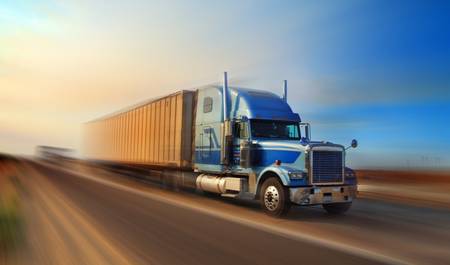 To understand how interest rates work with the economy, an analogy is useful. Consider a very large truck. As the truck moves, interest rates are the brakes. Raising interest rates is applying more break, and reducing interest rates is applying less brake. However, there is a problem with only using breaks to control your speed, namely that once you have taken your foot all the way off of the brake, there is nothing more you can do to increase speed. You just have to wait for an incline, or a really strong gust of wind, or whatever.
Additionally, you don’t want to have to jam on the brakes very hard. The U.S. economy is a very large tractor trailer. Slamming on the brakes is seldom pleasant. Raising interest rates high and fast is similarly unpleasant for the economy. That means that as you take your foot off the brake to increase speed, you have to keep a wary on not letting too much speed build up.
If you’re wondering about the gas pedal in this analogy, then good for you. Traditionally, the gas for the economy come from Washington, where additional government spending is the usual gas for getting the economy back up to speed. In times past, the government could be counted on to argue over WHERE to spend the money, but not IF to spend the money to boost the economy. Unfortunately, now that Washington has broken down into nothing but a blame game and thoughts of next election’s strategy, there is no gas. In fact, the government is actually cutting spending, which is akin to taking your foot off both the accelerator and the brake at the same time, it doesn’t help you gain any speed.
The Fed is using unusual efforts to try and supply some gas, but none of them are the same as using the gas pedal. So, the problem with the economy is that absent any new gas, the truck can only pick up speed very slowly, and now the Fed is taking it’s pedal off it’s kind-of gas as well by ending it’s bond buying program.
The second problem is that certain people are always more concerned about applying the brakes rather than getting the truck moving. These people are called inflation hawks, and there are always several on the Fed board. This is good, but it may be premature in this case, where job growth is really just filling the hole from the last decade and there is little or no sign of coming inflation.
In other words, while it does seem that the U.S. economy truck has started rolling forward ever so slightly, no more gas is coming, and some people are already looking to re-apply the brakes. So, yes, the economy is good right now, but not good enough. More importantly, if the slightest thing happens to slow the economy back down, no one has any gas left to get it going again.
So, it’s a good time to be worried, but if everything keeps going the way it is, we’ll hopefully have that truck moving a little faster sometime next year.
For the quickest answer, look no further than holiday spending as reported by retailers. If you see stronger than last year, but still weak overall, that’s more of the same. Anything bleaker is trouble, anything better, might mean that truck has finally caught a bit of a hill.