Federal Reserve Holds

Federal Reserve Holds 1

The Federal Reserve Board voted not to raise interest rates at their October meeting, finally realizing that the runaway freight train of interest rate hikes might be more detrimental to economy than the inflation that they are supposedly fighting. Did the Fed Stop Too Late The big question on everyone who actually participates in the economy’s mind is did the Fed stop raising interest rates too late. Already the housing market is seizing up as home buyers realize they have been priced out of homes by higher interest rates and sellers find that they no longer can sell their home in a weekend, or maybe within several weeks. Higher food prices are still cutting deep, but so are those credit card bills. Variable rate credit cards and HELOCs have spent the last year delivering higher and higher payments to borrowers. Many borrowers who were perfectly fine servicing their debt suddenly find themselves staring down bankruptcy. And we all know what happens when a huge chunk of America goes and declares bankruptcy. The only high point in all of this is rising wages and low unemployment are keeping more people above water than in the past. In states with rising minimum …

Read More

Fed Raises – Did It Break the Economy?

Fed Raises - Did It Break the Economy? 2

I’m not an economist and I don’t play one on TV. I haven’t even stayed at a Holiday Inn Express, but I have been involved in finance for a long time now, and I’m old enough to have a pretty good memory. Add that to a lot of research over the years as a freelance financial writer for a lot of publications and websites, and I have an informed opinion, if not a professional one. Fed Raises Rates 0.75% Again The Fed raised interest rates again, another big 0.75% hike. So, here is the punchline. The Fed has raised interest rates a total of 1.5% in just two months. Look up the last time the Fed raised rates that quickly. Go ahead. I’ll wait. It was the 1980s and inflation was crazy rampant. Every economist older than 50 had drilled into their head that inflation was more of a problem than a recession because that is what is true for Wall Street. Unfortunately, that is not necessarily what is good for Main Street, and by extension, the markets. Last time the Fed raised rates was from 2016 to 2019. That increase was a nice gentle 2.25% increase over three years. …

Read More

Did Mortgage Rates Hit 12-Year High?

Did Mortgage Rates Hit 12-Year High? 3

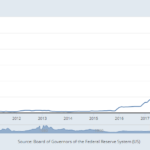
The press loves a good scare story, and mortgage rates hitting a 12-year high is just the ticket. Mortgage rates did hit a 12-year high, and I suppose for those who are newer to the world of finance that probably seems like a big deal, but the reality is a little different. The 30-year fixed mortgage averaged 5.11% last week. That isn’t remotely a historically high mortgage interest rate. In fact, it wasn’t that long ago that a 5% mortgage was a great rate. It still is. But, these haven’t been normal times. The U.S. economy seems to lag on differently than it once did. The inflation we see today is the only real inflation we have seen in decades. Every time the American economy looked it like might get going back to “normal” something happened to smack it back down turning what used to be crazy, historically low interest rates into normal interest rates to the newest generation hitting financial literacy. This 10-year chart of the Federal Funds rate shows that we haven’t seen a Fed Funds rate above 2.5% in the last decade. In fact, just when we got close to something that might be considered normal or …

Read More

The Fed’s Balance Sheet

interest rates federal reserve

The Federal Reserve is best known for setting the Fed Funds Rate which is the interest rate that the Federal Reserve charges banks for overnight loans. That, in turn, influences, or outright directly adjusts, several other interest rates that have a meaningful impact not only on business, but American citizens and consumers as well What Is the Fed’s Balance Sheet? What is the Federal Reserve’s balance sheet? Well, that’s a tiny bit complicated. To understand you have to accept the concept that there is a certain amount of money floating around in the U.S. economy at any one time. That amount is not fixed. One day, you have $50,000 in your checking account, and a $50,000 loan, for a total of $100,000 floating around in the overall money supply. The next day, you use that $50,000 in your checking account to pay off the loan, essentially removing that $50,000 from the economy. The U.S. economy is enormous, and at any one time there are trillions of dollars floating around in the economy. However, some of that money is moving and doing something and some of it is stuck. Think of all those gold coins in Scrooge McDuck’s vault. They exist. …

Read More

How Do Rising Interest Rates Affect Credit Cards?

rewards credit card reviews

How Does The Federal Reserve Raising Rates Affect My Credit Cards? You heard that the Federal Reserve raised interest rates. How does the Fed increasing interest rates affect your credit cards personally? It’s actually pretty easy to tell. First off, your credit cards are most likely tied to something called the prime rate, not the federal funds rate. The rate the Federal reserve raises is the rate the Fed charges banks for overnight loans. The prime rate is the interest rate that banks charge their most valuable (wealthy) customers. The prime rate moves in step with the Fed Funds rate. Before the Fed raised rates, the fed fund rate was 0% (technically 0% – 0.25%), now it is 0.25% (technically 0.25% to 0.50%). The prime rate was 3.25% and now it is 3.50%. How do rising interest rates affect your credit cards? Simple. Your credit card interest rate is the prime rate plus another amount. The other amount is made up by the credit card issuer and you agreed to it when you signed the credit card application. Finding out how much your interest rate is, is easy. Just check your statement or log on to your credit card’s website. …

Read More

Fed Day 2022 – Fun and Rates

interest rates federal reserve

It’s Fed Day, boys and girls, and the markets are feeling pretty good this morning, having already priced in negativity from Russia’s invasion of Ukraine. Markets are up, although they trimmed the earlier pop. All eyes are on the Federal Reserve Board meeting where the Fed is expected to raise interest rates. Usually, rising interest rates mean putting the brakes on business and stocks, so why is the market happy? Inflation is higher than anyone would like, and the biggest, baddest, bluntest, tool in the inflation fighting basket is higher interest rates. In other words, everyone wants higher rates in order to fix inflation, and everyone is expecting the Fed to give them what they want. So, the markets are up. What’s the catch? Well, higher rates really do slow down the economy, and while inflation has surged as of late, remember it’s coming off of years of very low inflation and a pandemic. It may be that the inflation we see is a temporary surge. While it cannot be ignored, it can be overreacted to, and this is where things get tricky. Raise interest rates too high, too fast, and crash the economy. Raise rates too slowly and let …

Read More

Blaming the Fed

Blaming the Fed 4

Selective amnesia and analysts dying to be “right” is contributing to a flood of inaccurate articles seeking to blame the Fed. I saw this in my Twitter feed this morning and I just couldn’t let it go by. It’s filled with the kind of half-truths and misinformation that builds an analyst’s career, unfortunately, but that doesn’t make it true. Here we go. According to this tweet, The Fed spent 12 years creating an “everything bubble,” a term so bizarre that it requires quotes. Oh, and the Fed didn’t spend 12 years creating this so-called everything bubble. Oh, and before we start pointing fingers, until THIS YEAR neither this analyst, nor almost any other was asking for the Fed to tighten monetary policy because the economy was teetering on a cliff and every bit of the stimulus was required to prevent the Great Recession II, or worse. Yep. For exactly, ONE MONTH, inflation has been a bit crazy. Too bad the graph they posted as “evidence” is so far zoomed out that you can’t see what really happened. Maybe they couldn’t find one that showed more recent events. Oh, wait! Here’s one. The crazy, reckless Fed that has been pumping up …

Read More

Will Fed Raise Rates Sooner Than Expected?

fed raise rates

There are several economists out there predicting that rising inflation will push the Federal Reserve to raise interest rates sooner than project. In fact, half of the Fed Board was talking about a rate increase in 2022 instead of the previously telegraphed 2024. But, does that mean The Fed will raise rates sooner than previously stated? Inflation Isn’t Coming All of this is predicated on inflation rising. The concern right now is that prices have been rising this year. This is all true, but this is October and that means the holiday shopping season is upon us, and chances are it won’t look very good come January. We’ve already seen the job reports showing that job growth is slowing despite a supposed worker shortage. Unemployed people spend a lot less at Christmas. But, there is more than that. Employed people who know unemployed people spend less as well due to a fear that they could soon be unemployed as well. Add to that reports that there are going to be supply chain problems, and that container ships have to wait excessive times to get their cargo unloaded by dock workers on the west coast and you end up with a …

Read More

Federal Reserve Meeting Notes Meaning

fed reserve meeting notes

The Federal Reserve meets once a quarter. After that meeting, they announce what, if any changes, they have made to the Fed’s interest rate policy. At the last meeting, there were no changes to the Federal Reserve’s interest rate targets. The Federal Reserve meeting notes refine the details of the main Fed announcement. Fed’s Meeting Notes Later, after they have been reviewed and made viewable for the public, the Fed releases the notes from it’s meeting. Financial analysts and market pundits then parse these notes for clues to the Fed’s thinking. This time, everyone is looking toward how the notes take about bond-buying tapering. What does this mean? The short version is that when the economy went so bad back during the Great Recession following the real estate market crash, the Fed had to do more than just cut interest rates to stabilize the economy. In my opinion, the Fed Chairman Ben Bernake saved the US economy from a hard recession by flooding the market with liquidity and saying that he would keep doing it for as long as it takes. Check out my Acorns review is Acorns Legit? Basically, as long as it takes, has never really come. One …

Read More

Fed Stays Steady

The Federal Reserve left interest rates unchanged, BUT they are beginning to taper off their bond buying program which will soak up some of the cheap money floating around out there and gently tighten the money supply. This is a smart move that helps reduce inflationary pressures while at the same time avoiding strangling the recovery growing out of the pandemic recession.