Are I Bonds a Good Investment Right Now?

series i bonds investing interest

There is a lot of chatter in the financial planning community as well as the investing writers and bloggers about investing in I Bonds. Are I bonds really a good investment right now? As with almost all investing and savings ideas, the answer is that it depends on your current financial situation and what you want to get out of your I bond investment. What Are I Bonds? The one thing the finance pundits are getting right is the description of I bonds. I bonds are a savings bond from the United States government just like the more well-known Series EE savings bonds. The main difference is that I bonds are designed not as a basic savings vehicle, but rather as one that keeps up with inflation. What Is The Point of I bonds? Technically, if your savings are not keeping up with inflation you are purchasing power. This is not the same as losing money, no matter what anyone tells you. If you have $10,000 in savings earning 1%, you are not losing money. Your savings are increasing at the rate of 1% every year. However, if inflation is 2%, you are losing purchasing power. Statistically speaking, your savings …
Read More

Welcome to Rule 8

rule 8 of investing

No rules about the stock market are 100% valid. In fact, a great many rules and sayings are flat out false, but there is just enough to juice in a few of them to keep, and just enough fund in a few others to keep them around. There’s the Santa Claus Rally, and Sell in May and Go Away, among others. Bob Farrell’s 10 Rules for Investing One of the rules, or set of rules, which keeps floating around due to both their perceived truth, and the fact that several of them are either obvious or broad enough to mostly always be true are Bob Farrell’s 10 Rules for Investing. Bob Farrell’s 10 Rules for Investing are time tested, even if not 100% correct. The most interesting of all Bob Farrell’s ten rules right now is number eight. Bob Farrell’s #8 Rule for Investing: Bear markets have three stages – sharp down, reflexive rebound, and a drawn-out fundamental downtrend. Depending on how you want to look at your bear market, could this be considered the reflexive rebound? It’s actually trickier than it sounds because, unlike what it might feel like, the market has not come straight down. There have been …

Read More

What Determines a Bear Market

Technically speaking, the stock market is already in a “correction.” A correction is defined as a drop of more than 10%. So, what qualifies as a bear market? What is meant by a bear market, and perhaps most importantly of all, is this a bear market? What Constitutes a Bear Market? Just like a correction is defined as a drop of 10% or more in the stock market, a bull market is defined as a drop of 20% in the markets. How do you measure for a bear market? First you have to pick an index, or other indicator for your measuring. A popular one is the S&P 500. Then, you calculate from the tippy top of your market indicator, and when it gets 20% lower than that, then you can call a bear market. Technically, there should also be widespread negative sentiment, and some of that stuff, but a financial website writer on a deadline likes hard numbers. So, according to the folks over at MarketWatch, we will be in a bear market if the S&P 500 closes below 3.837.25, then we have ourselves a bear market. Obviously, if this is a real bear market, it will do more …

Read More

S&P 500 Hits 52-Week Low

sp500 52 week lows

Now, things are getting interesting. There is a new SP500 52-week low. I’ve spent most of the first part of this year making the argument that the 2021 stock market run, especially the October 21 to January 22 was overdone and that the corresponding downturn in the markets from around February 2022 to April 2022 could be considered more of a return to “normal” than any sort of market correction. Reasonable minds may differ. Market Downturn Gets Real Today, the S&P 500 took out its 52-week low. From here on out, everything down, is truly down. Our one big sideways stock market ends here, and we really are heading for a potential correction here. This is why people calling for the Fed to raise interest rates so fast are dead wrong. The signs of the economy slowing, but not declining, are everywhere. That is exactly where you want to be. That is what a soft landing is. An economy gliding back to normal growth, normal employment, and normal interest rates all without triggering layoffs, housing crashes, and so on. All the Fed needs here is a little tap on the brakes. If it were me, I would skip a rate …

Read More

Stock Market Melt Up

stock market melt up

Oh, goodie. It’s time for some more stock market terminology. What Is a Melt Up? The world of finance, like any specialized group, has numerous terms, acronyms, and phrases that apply to managing money and investing in the stock market. Things like “Santa Claus Rally” are less about being able to describe something, and more about having fun, sometimes clever, ways to describing events, strategies, and happenings that occur. Santa Claus Rally — The somewhat common phenomenon of the stock market rising into the end of the year. Today’s word of the day comes courtesy of CNN Finance and Luke Lango, InvestorPlace senior investment analyst who wrote that they believe there will be a massive melt up over the next two years in which the stock market would rise 20% or more before tipping over into a recession or crash. I haven’t had a chance to look into Luke Lango’s track record. Maybe I’ll do that when I finish writing my freelance finance writer projects. Should We Worry About a Melt Up? Good news, investors. As always, the best way to invest for long-term goals is with a well-diversified portfolio tailored to your goals and risk tolerance. Such a portfolio …

Read More

Stock Market Trading Sideways

nothing to see here

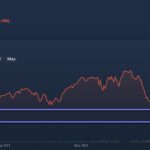
Update: It’s been 15 days of breathless up and down headlines from the financial media since I first wrote this article, and the stock market is STILL trading sideways. Take a look at three months of the Dow. The stock market often trades “sideways” as it consolidates after moves up or down. This is very common after big run-ups or drops, as well as when the economy is sort of waiting to see what happens. Of course, the stock market doesn’t literally trade sideways with the S&P 500 chart moving to the right as some sort of straight line. Instead, the market goes up and down, sometimes daily, sometimes over a period of a few days, all with the eventually outcome of having not moved up or down much at all. However, that doesn’t make for a clickable headline for financial reporters and financial news sites. So instead, we see things like this from Marketwatch. U.S. stocks fell Tuesday, with the Nasdaq Composite leading the way down after the previous session’s technology sector gains, as investors kept a close eye on plans for more sanctions on Russia and remarks by Federal Reserve policy makers. Nasdaq leads stocks lower as investors …

Read More

Active Mutual Funds Suck Compared To Index Funds

Active Mutual Funds Suck Compared To Index Funds 1

You have probably heard before that most mutual funds do not beat the market. Well, it’s true again, or true still, whichever you prefer. The S&P Dow Jones Indexes (yes, they might be a little biased, but they make their data available, and no one says it’s wrong) put out a report called SPIVA U.S. Year-End 2021 in which they state that nearly 80% of all actively managed domestic equity funds lagged the S&P 1500 in 2021. Even worse, 98.6% of actively managed large-cap growth funds failed to beat the S&P 500 Growth. If that sounds too specific for you, 85% of actively managed large-cap funds trailed the S&P 500. The numbers aren’t much better for other categories. This year, the SPVIA leaves no room to “Yeah, but…” by putting to bed the notion that actively managed mutual funds better handle volatility noting that whether it’s 3-year, 5-year, 10-year, or 20-year risk-adjusted returns, active funds underperform the index. Survivorship Bias The reality is that the situation is actually much worse. Every year approximately 5% of actively managed mutual funds disappear via merger or liquidation. If you think mutual fund companies are merging or liquidating their winning funds, then I have …

Read More

Are Gold Mutual Funds a Good Way to Invest In Gold?

investing in gold bars

Recently, a client explained to me how he thought gold was a good investment and protection against inflation. I’m not going to talk today about if he is right or wrong. Instead, I’ll mention that his fabulous do it yourself investment solution was Fidelity’s Gold Fund. Good call? Gold Mutual Fund Holdings Well, it came as quite a shock to him that actual gold is only the sixth biggest investment in the fund. Five bigger investments in the mutual fund are in companies that have something to do with the gold industry. Granted, those companies’ stock prices will be heavily influenced by the price of gold, but certainly not on a one-for-one basis, and it is very possible for gold companies to have problems (and thus lower stock prices) unrelated to gold prices. If the point of investing in gold is to get an alternative investment from the stock market itself, investing in the stock of gold-based companies does not achieve that goal. — Is Bitcoin better than gold for this purpose? Gold companies are very susceptible to environmental lawsuits and regulations. Not to mention, gold happens to be mined in some very unstable countries throughout the world. A military …

Read More

Share Buyback Myths

Share Buyback Myths 2

Arrgghhh! Share buybacks, or stock repurchases, are a tool that publicly traded companies use to manipulate their shareholders into making them think that they are working for them. Unfortunately, with big business schools still teaching a curriculum that starts with The Wealth of Nations and doesn’t much update from there, there are all too many stock analysts and pundits out there pushing share buybacks as good corporate governance. Returning Capital to Shareholders The gold standard of returning capital to shareholders is paying cash dividends. There is a catch though. You can’t use accounting to create cash that you pay out. The other catch is that shareholders don’t like it when you cut a cash dividend once you start paying it. In other words, if you are going to pay a cash dividend, you better really be in a good position. Share Buybacks Wasting Money Enter share buybacks. A share buyback is where a company takes the extra cash it has and instead of paying a cash dividend, which it can’t play around with, it buys back its own shares. A share buyback is supposed to happen when a company feels its shares are undervalued. That isn’t what really happens anymore. …

Read More

Russia Invades Ukraine

Russia Invades Ukraine 3

Thinking about your investments as war starts is kind of cold and calculating, but also perfectly natural. What should I do when Russia invades Ukraine? First, remember, investors do not like uncertainty. Nothing is more uncertain than the course of war. Expect a market downturn with every new development that isn’t the war ending. Second, remember that the markets tend to overreact to initial news because everyone is both reacting, and trying to predict how others will react. Third, remember if you have a well-diversified portfolio, this sort of thing should not affect your investing strategy. Markets go up and markets go down. As far as your long-term investments are concerned it doesn’t matter whether the markets went down because of war, or just a cyclical phase of the market cycle. Do not panic. Do not sell unless you were already planning it. Fourth, if you are actively investing for the long-term in your 401k, IRA, 529 plan, or whatever else, KEEP GOING. This is exactly how dollar cost averaging works for you. Your investments when the markets are down become your buying at the bottom in the future. Do not miss the opportunity. Dollar cost averaging does the work …

Read More