At all times the Federal Reserve’s Open Market committee has a dual task. One task is to guard against inflation. The other task is to not make the economy implode. In most cases, this isn’t as hard as it sounds as long as you have strong Federal Reserve bankers who don’t cave to Wall Street’s pressure (or dance like monkeys to in the first place.)
For 2022, The Fed has one of the tricky times.
This is what Wall Street pressure looks like:
December payroll data showed a far fewer than Wall Street said it would be addition of 199,000 to payrolls, but wages did increase 4.7% year over year.
There is a very big catch here. Remember that the economy got messed up rather good with Covid and it really isn’t done with Covid, so all of these numbers have to be taken against the fact that last year was not good and this year isn’t so much a raging economy as it is putting the pieces that fell off the board back up on it.
Don’t forget to read our Zelle review.
That being said, inflation is up, even compared to pre-Covid and you don’t want to fall behind either.
Wall Street is begging for a pile of rate cuts in 2022, but that might be just the wrong thing at the wrong time. Economic estimates were already revised down when Machin blocked the Build Back Better law that would have poured money into states right when they needed it to help with crumbling infrastructure.
The reality is that the Fed does need to tighten monetary policy, but the history has shown that slow, meticulous, tightening while keeping a keen eye on the real, actual, data rather than Wall Street’s frequently wrong estimates is the way to go.
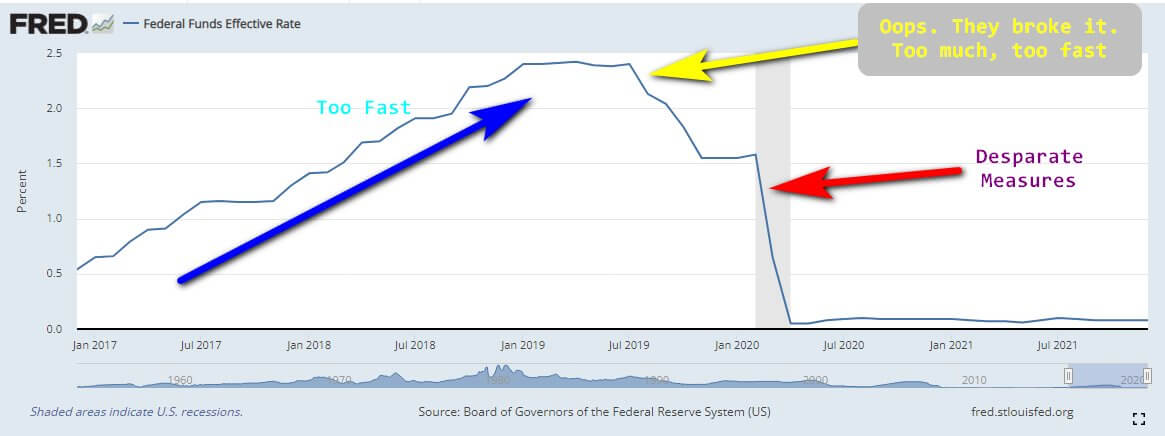
Otherwise, the Fed can raise rates too high, too fast. Last time, the economy snapped. That’s how we got to zero percent interest in the first place. Do you think any big Wall Street firms were warning about overly aggressive interest rate increases by the Fed in 2018 or 2019?
Interestingly, the Fed could still do a lot of tightening just by continuing to taper, and move toward eliminating its monthly bond purchases, but lower bond purchases don’t improve the bottom lines of big banks as much as rate increases do.
The good news is that the Fed should have a lot of room here. After all, zero percent interest rates are not normal in an economy like this. The only question is will that raise too fast, overshoot, and wreck an economy that is likely to plunge if it can’t continue its moderate growth thanks to too much tightening.
And check out our Rakuten cash back review to throw a little extra cash in your savings.